John Garvin
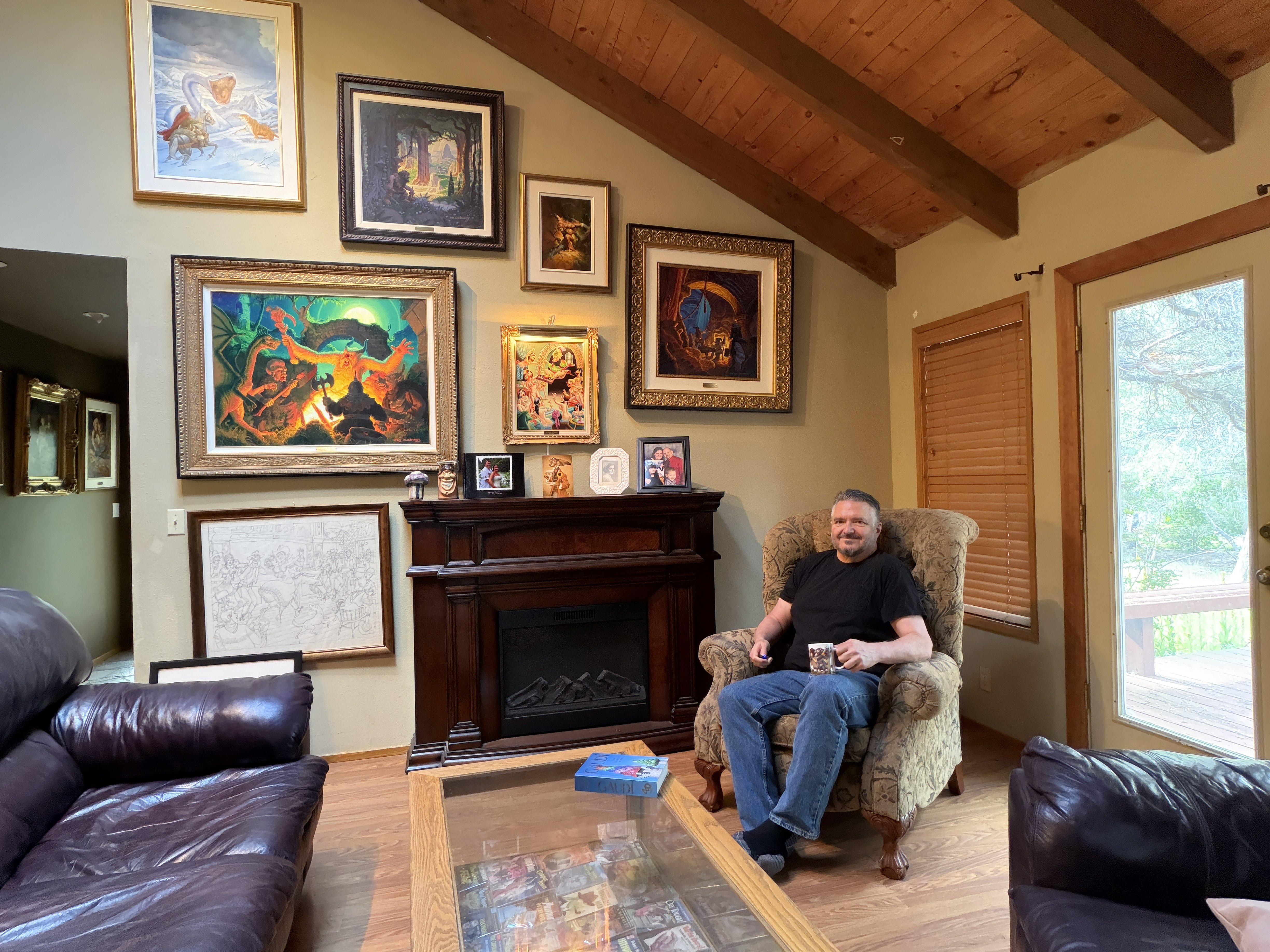
John Garvin is a writer, artist, game creator, director, cartoonist, and historian whose career spans more than five decades of storytelling and technological change. He is best known for creating, writing, and serving as creative director of Days Gone, and for his work on the Syphon Filter series, Uncharted: Golden Abyss, and others. But his creative life extends far beyond video games, encompassing fine-art cartoons in oils, independent comics, novels, graphic novels, and books documenting the history of American cartooning.
His life and career are also intertwined with the history of video games themselves. From playing Pong in the early 1970s to programming games on the Atari 800, from the first CD-ROM multimedia productions to 3D graphics, motion capture, performance capture, and now, next-generation AI, 3D printing, and more, Garvin has spent much of his life working at the intersection of art, storytelling, and emerging technology.
The common thread through it all is the creation of worlds: imaginary places populated by characters whose stories can be told through pictures, prose, animation, or interactive experiences. Today, Garvin also shares what he has learned, using his YouTube channel to explore painting and game design and appearing on podcasts to discuss technology, creativity, and storytelling. He is expanding that work through talks, seminars, panel discussions, and creative consulting, bringing decades of hands-on experience to artists, developers, and audiences interested in how worlds are made.
A Childhood of Comics, Cartoons, and Science Fiction
Born in 1960, Garvin grew up in rural Southern Oregon during an era when comic books, television cartoons, and science fiction offered seemingly unlimited opportunities for imaginative escape.
His childhood reading included Superman, Batman, Jack Kirby and Stan Lee's Marvel superheroes, and Kirby's Kamandi, the Last Boy on Earth. He was equally fascinated by Dell comics, with their painted covers depicting dinosaurs, jungle adventures, and mysterious creatures. Saturday morning television introduced him to decades of animation, from the theatrical cartoons of the 1940s and 1950s to the increasingly commercial cartoon programming of the 1960s and 1970s.
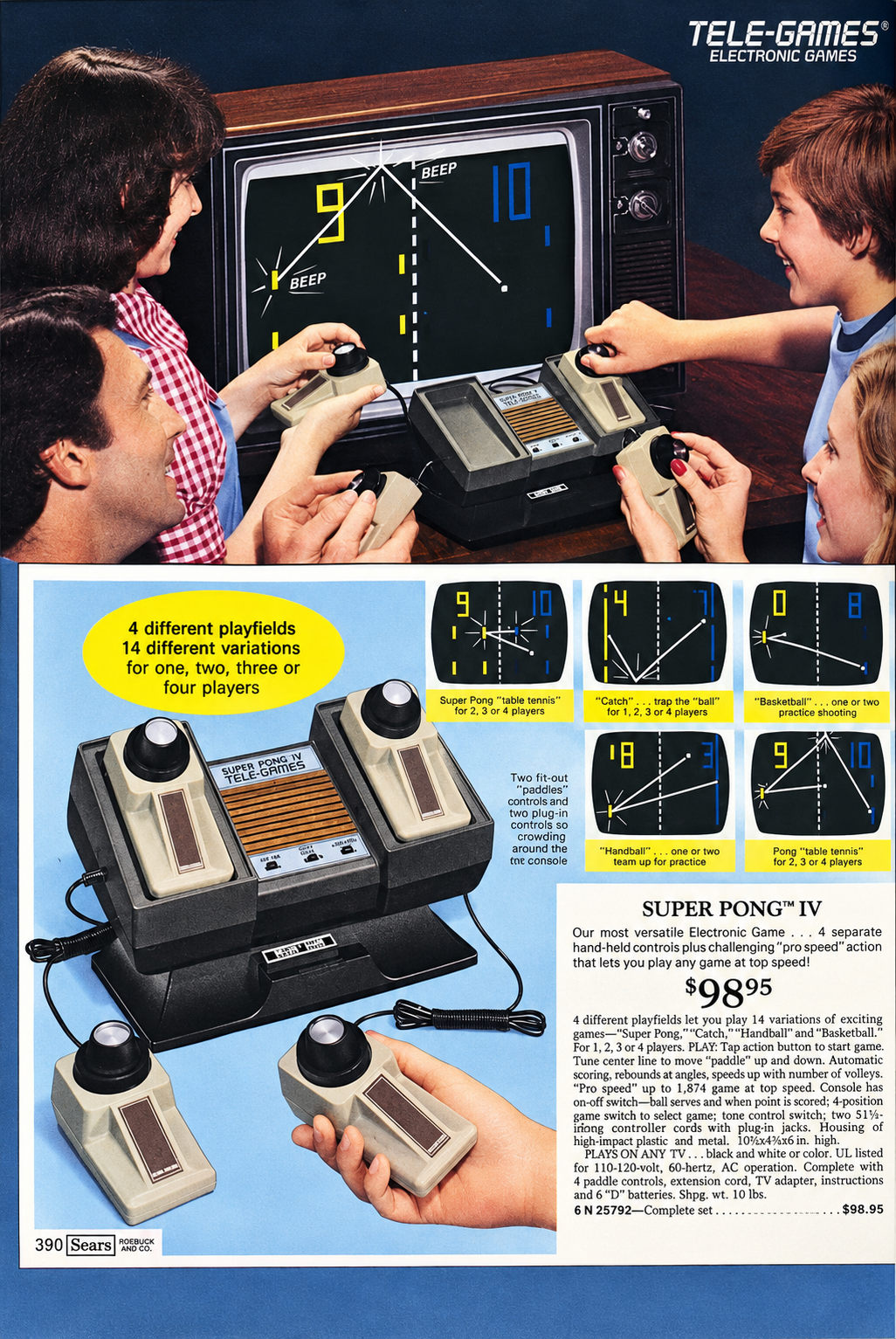
He was also among the first generation of children to grow up playing video games. His family had a home Pong machine in the early 1970s, and he spent countless quarters playing the first generation of arcade games. At the time, video games were little more than moving dots, electronic sounds, and simple rules, but they offered something that books, comics, and movies could not: the opportunity to participate in an imaginary world rather than merely observe it.
Garvin's path toward a creative career was anything but conventional.
After leaving junior high school in the early 1970s, he found himself married and raising a family while still a teenager. He worked as a gas station attendant, dishwasher, and gravedigger at one of Medford's largest cemeteries. No one in his family had attended college, and a professional career in art, writing, or technology seemed impossibly distant.
Then, in 1977, several experiences changed his life.
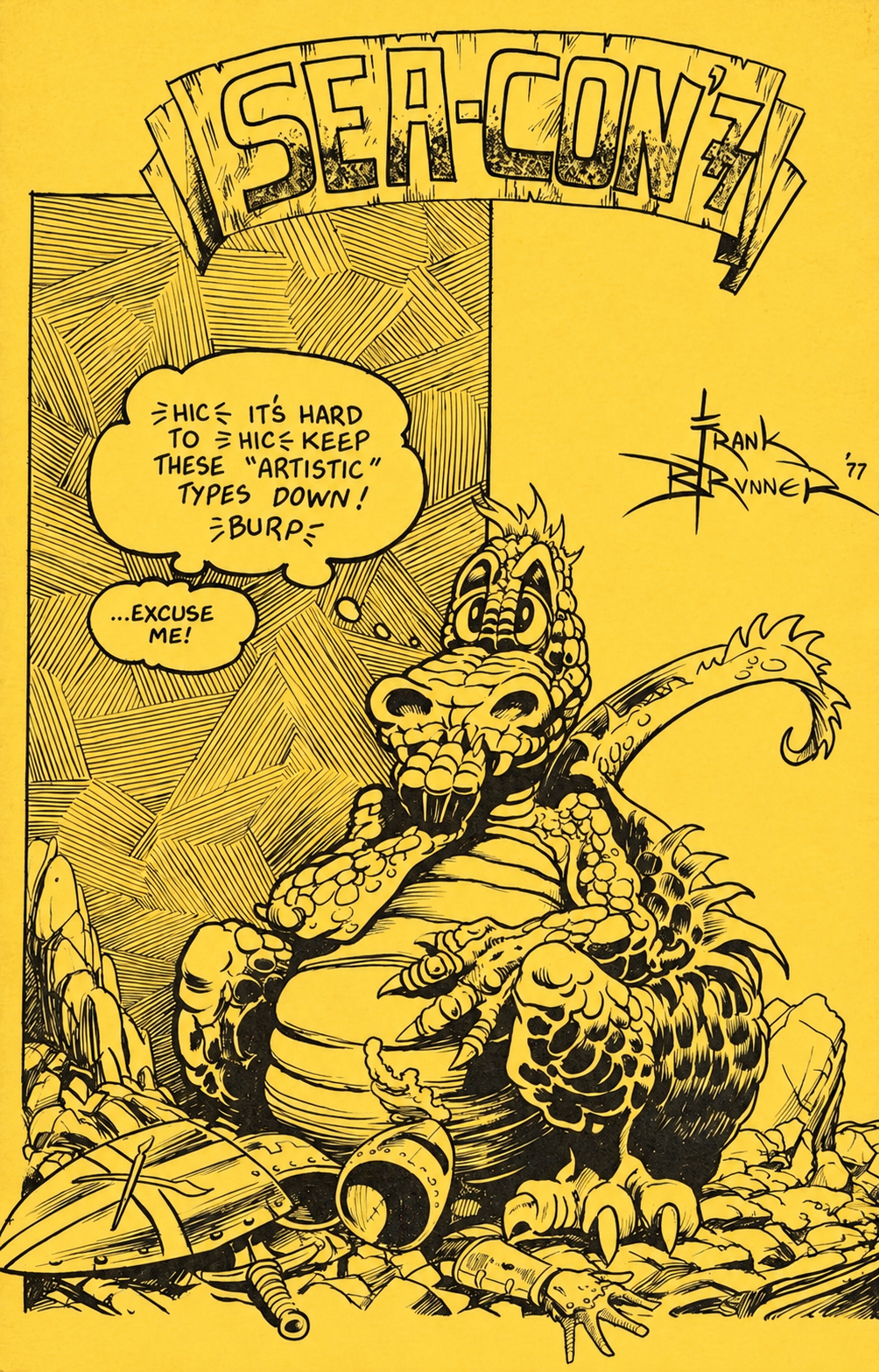
His stepfather had purchased a used bookstore that also sold collectible comic books. That summer, they traveled to Seattle for SeaCon, a science-fiction convention. There, Garvin saw Star Wars during its original theatrical release, attended a midnight screening of Flesh Gordon, encountered the tabletop role-playing game Metamorphosis Alpha, and purchased the 1977 edition of the Comic Book Price Guide.
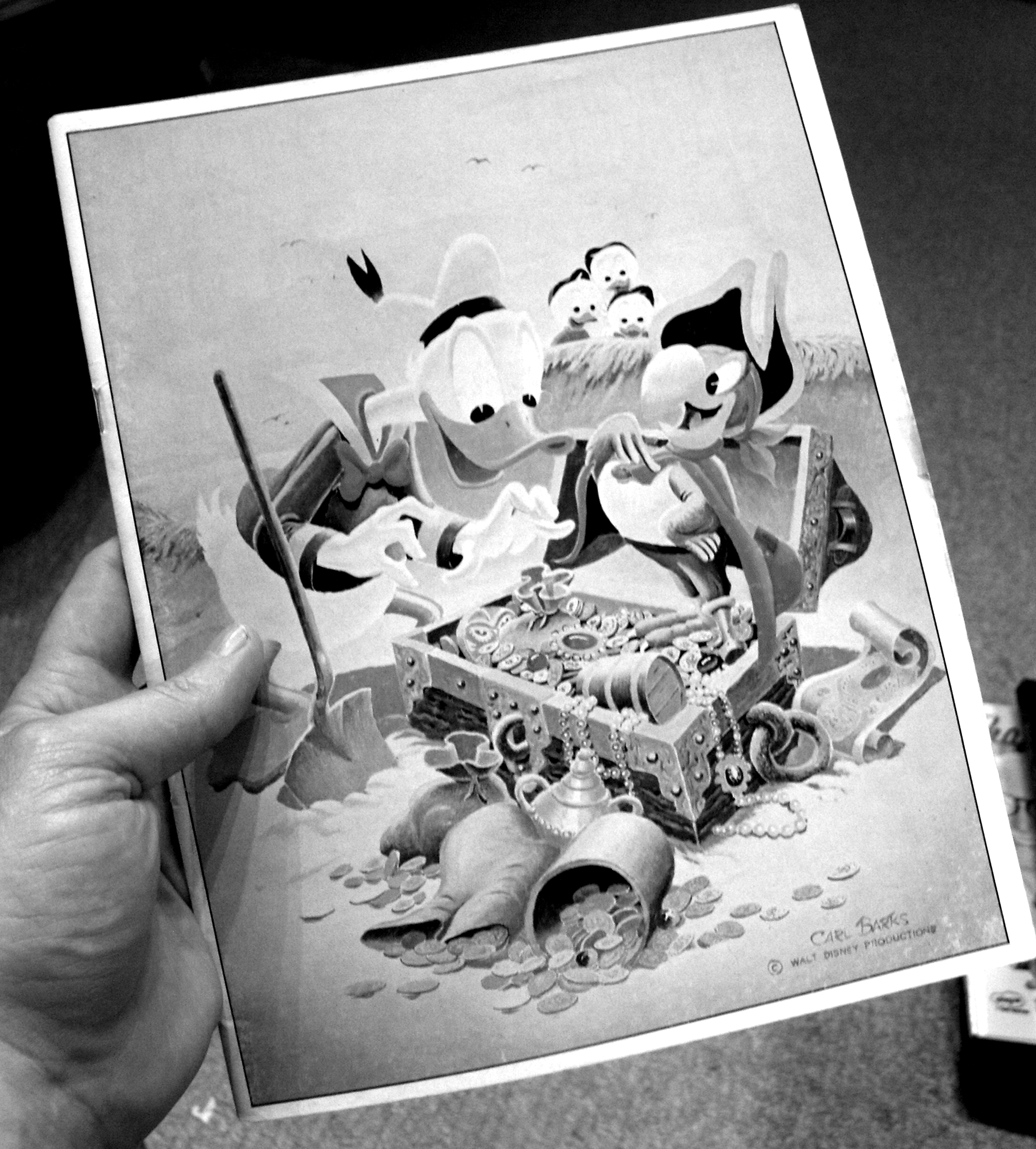
Inside the guide were reproductions of oil paintings by legendary Disney cartoonist Carl Barks.
Those paintings would change the course of his life.
Carl Barks, Painting, and the Discovery of Craft
Garvin was mesmerized by Barks's paintings. Painted cartoons were nothing new: he had grown up with the illustrated covers of Mad, Topps trading cards, and Dell comics. But Barks's work was different.
His paintings combined cartoon characters with meticulously rendered environments, realistic props, sophisticated lighting, and carefully staged visual storytelling. The characters were unmistakably cartoons, yet they seemed to inhabit believable physical worlds.
More importantly, these were not illustrations created for publication. They were original oil paintings intended to hang on collectors' walls. In retirement, Barks had transformed the visual language of comic books into something approaching an entirely new genre: fine-art cartoons in oils.
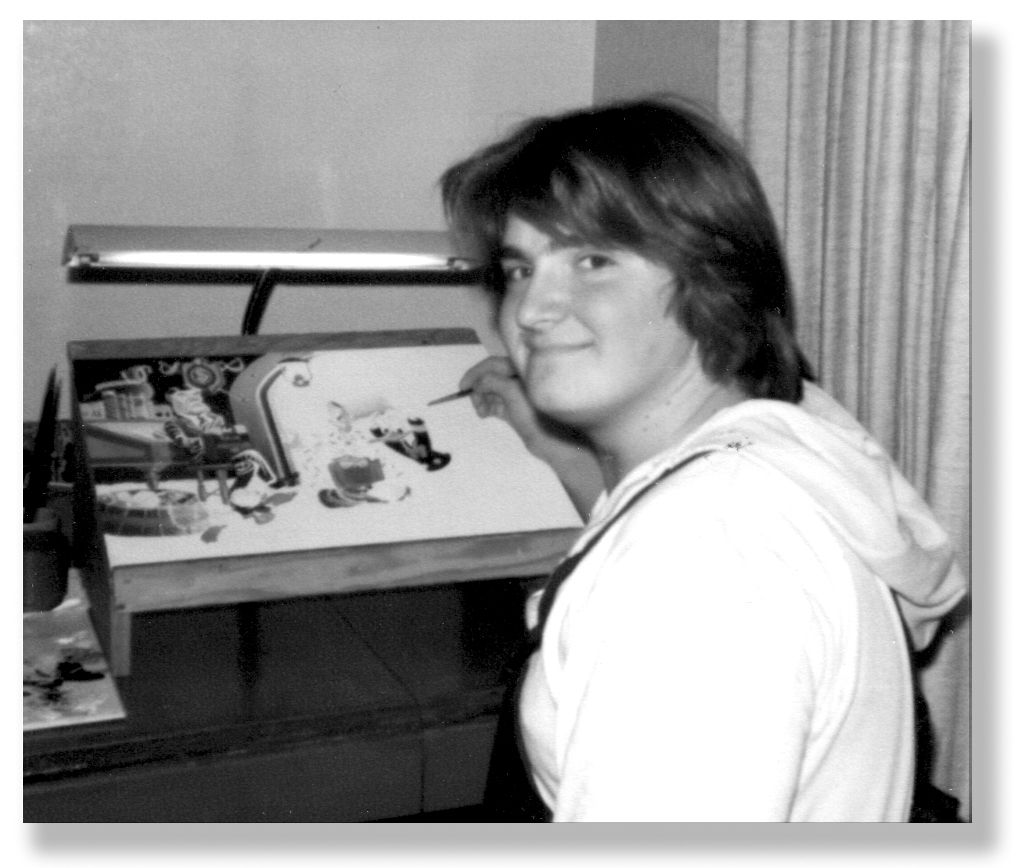
Garvin began painting that same year, initially copying Barks's work to understand his techniques.
When Carl and his wife Garé, an accomplished painter herself, settled in Southern Oregon, Garvin had the opportunity to spend time with both artists during the 1980s. He learned about composition, lighting, color harmony, craftsmanship, and the importance of telling a story through a single image.
By then, he was creating original paintings, initially using Disney-inspired characters and eventually expanding into other subjects drawn from popular culture.
The influence of Barks went beyond painting. Inspired by the older artist's discipline and work ethic, Garvin earned his GED, attended college, and eventually received a bachelor's degree in English from Southern Oregon University and a master's degree in English from the University of Oregon.
Painting would remain a constant throughout his life, even as computers opened an entirely different creative frontier.
Comics, Computers, and the Early Video Game Era
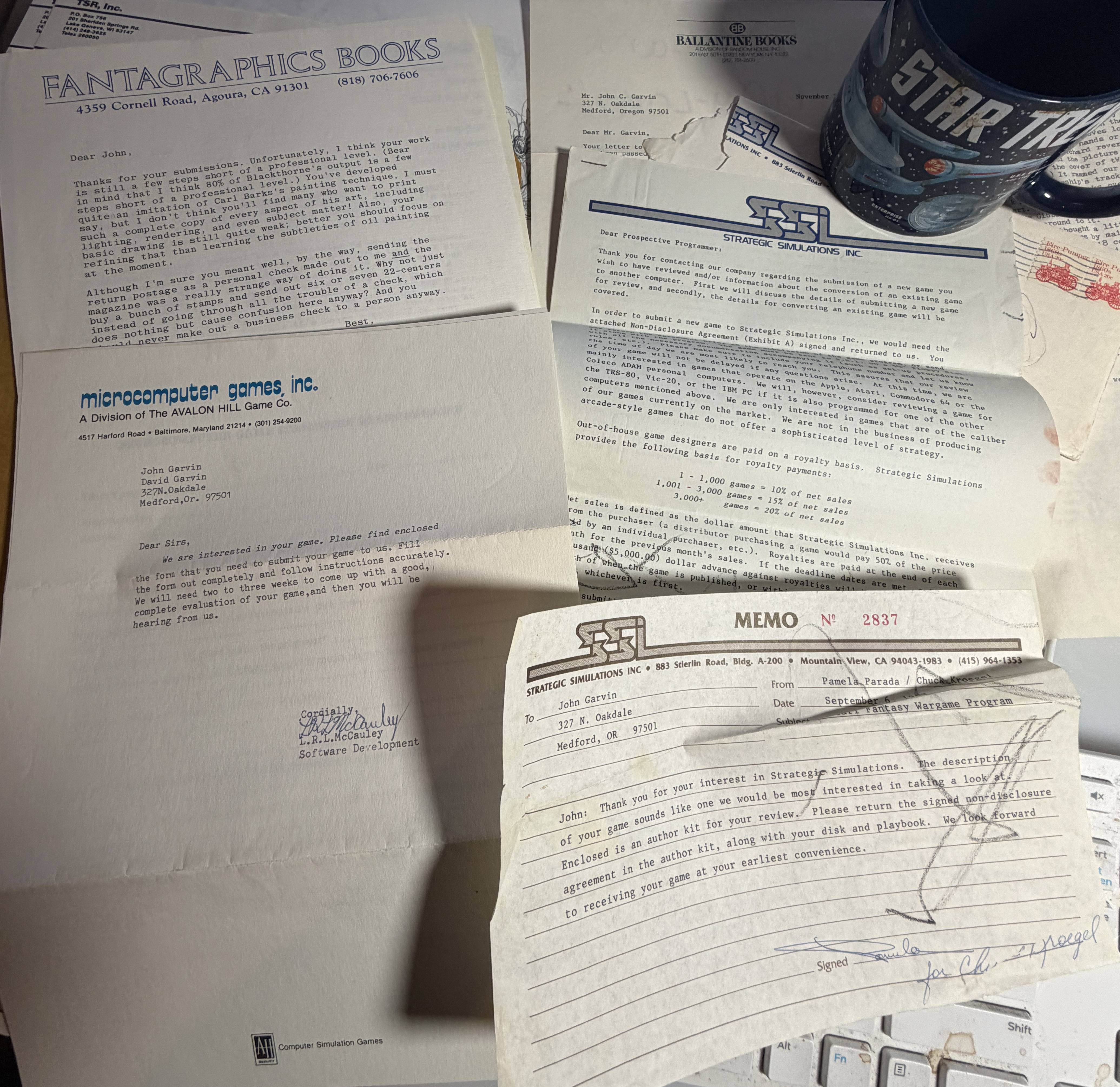
In the early 1980s, Garvin began programming on the Atari 800, teaching himself BASIC and experimenting with original game designs.
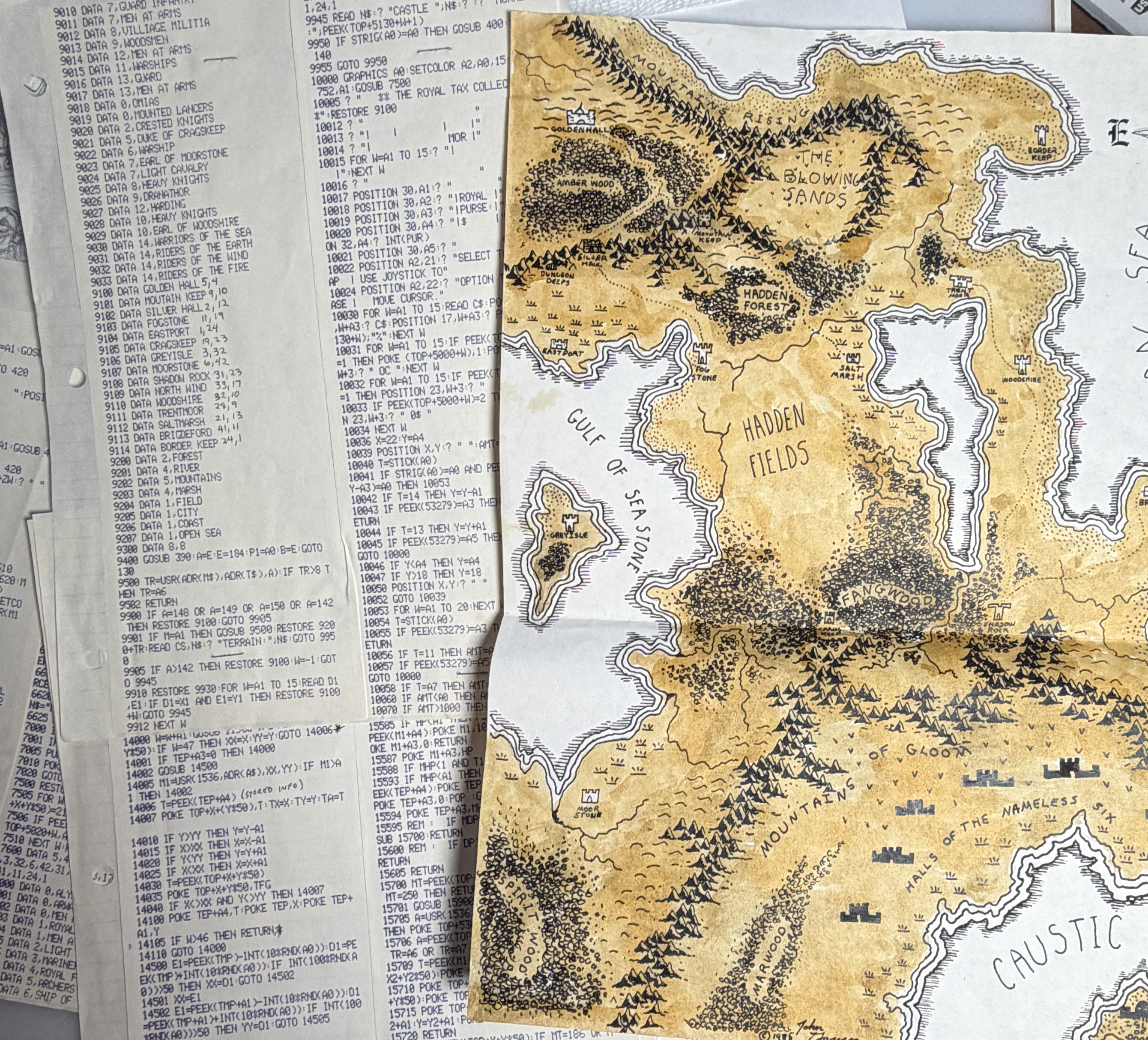
His earliest programs included a fantasy role-playing game inspired by Ultima, a strategy game based on the Napoleonic Wars, and The Battle of Hadden Fields, a fantasy strategy war game modeled after Chris Crawford’s Eastern Front. Decades later, he used GPT to study the surviving Atari BASIC listing and reconstruct a playable version of The Battle of Hadden Fields.
This was an era when computer games were frequently created by individuals or very small teams. Writing code, designing game systems, creating artwork, and inventing stories were often parts of the same job. Text adventures, primitive graphics, and severe memory limitations demanded imagination from both developers and players.
At the same time, Garvin was participating in the independent black-and-white comic-book movement of the 1980s.
He created and contributed to comics including Peggy and Featherton Fowl, the latter appearing in The Comics Buyer's Guide. His cartoons and articles also appeared in Carl Barks fanzines and other comic publications.
Cartooning gave him opportunities to develop characters, experiment with humor, and tell stories through sequential images. Programming offered a different challenge: creating worlds that responded to the player's decisions.
Both required the same fundamental skills—characterization, pacing, visual storytelling, and an understanding of how an audience experiences a fictional world.
By the early 1990s, those interests were beginning to converge professionally.
The Multimedia Revolution
The early 1990s brought dramatic changes to video games. CD-ROM technology offered vastly more storage than traditional floppy disks and cartridges, making it possible to incorporate recorded dialogue, full animation, original musical scores, and increasingly ambitious cinematic sequences.
Three-dimensional computer graphics were also becoming practical tools for game development.
Garvin quickly mastered the emerging 3D software, becoming an accomplished computer artist. His expertise earned him recognition as a 3D Studio MAX Master, and he was featured in a national advertising campaign by Autodesk during the 1990s.
Working at Dynamix, a division of Sierra On-Line, he found himself at the forefront of the multimedia revolution.
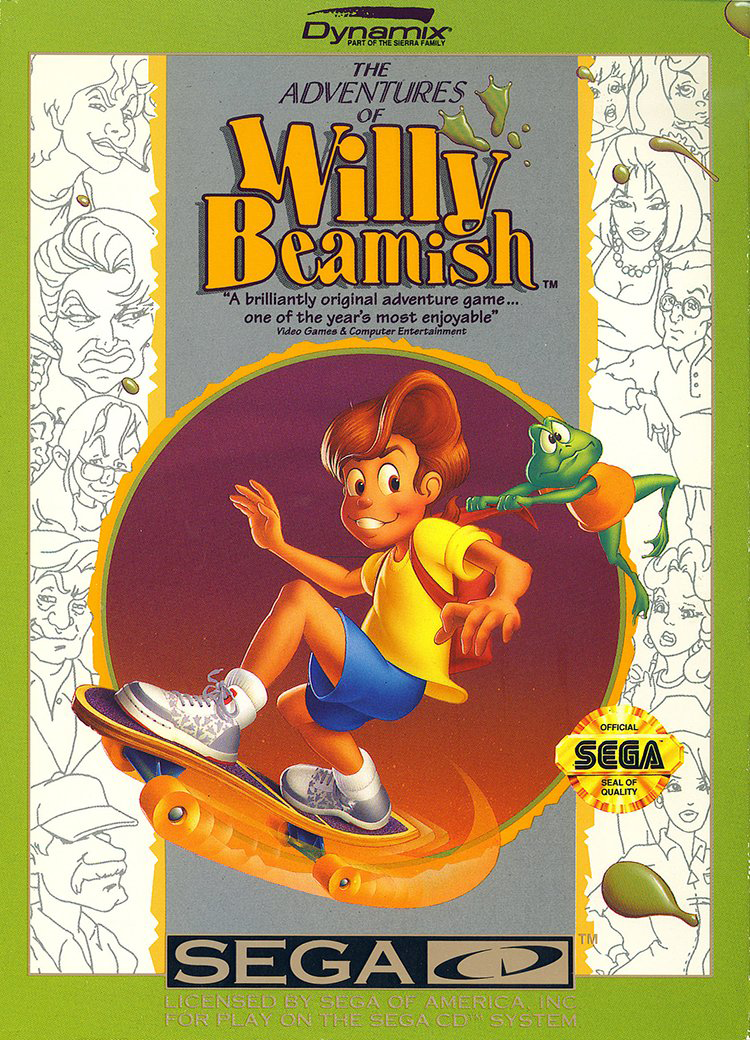
His first assignment as an art director was The Adventures of Willy Beamish (Sega CD, 1993), an enhanced version of Dynamix's acclaimed 1991 PC adventure game.
The Sega CD production expanded the original game with additional animation, recorded dialogue, music, and lip-synchronized characters, transforming a traditional point-and-click adventure into something closer to an interactive animated film.
It was one of the early examples of what the industry was beginning to call multimedia entertainment, an attempt to combine the visual and narrative possibilities of movies, animation, and interactive games.
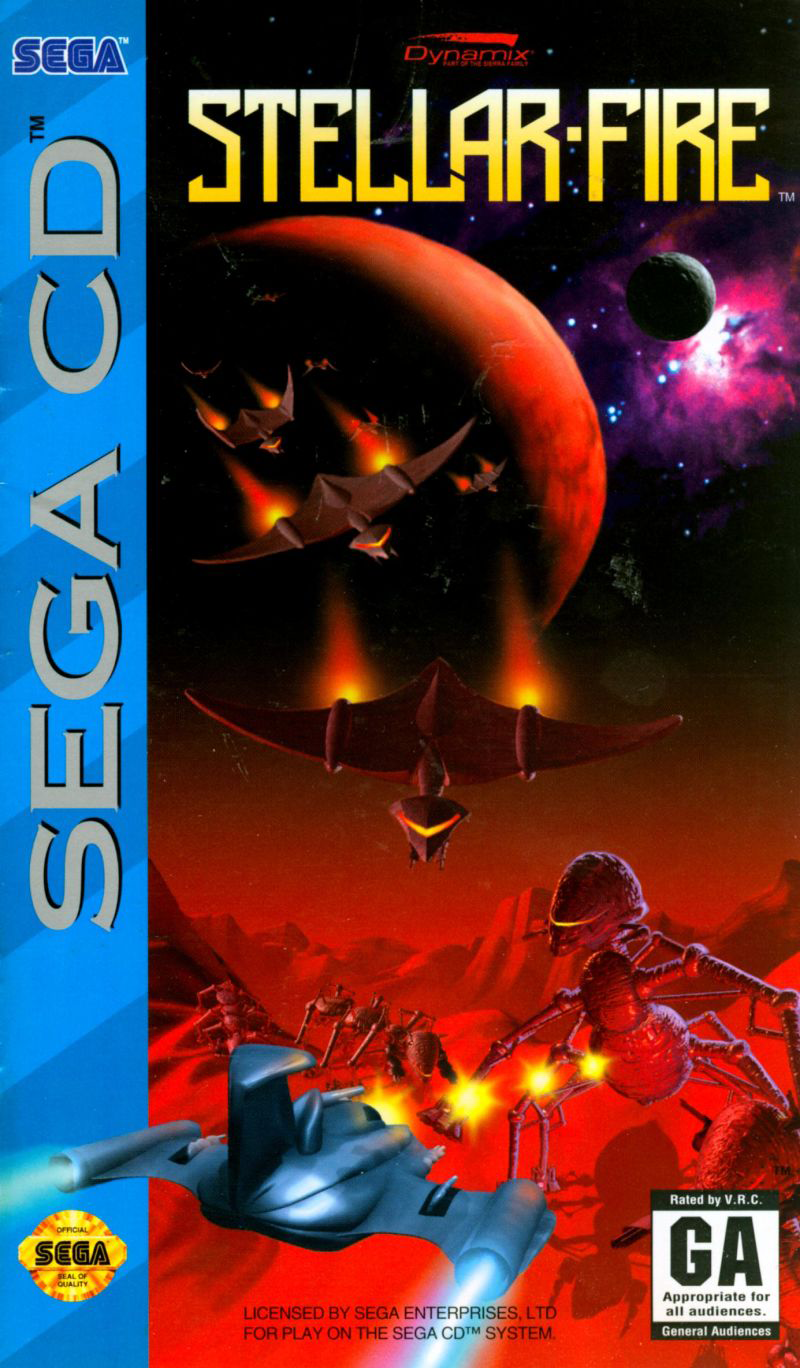
Garvin's next project, Stellar-Fire (Sega CD, 1993), marked his first opportunity to write and direct a game. Garvin also created the published digital cover artwork for Stellar-Fire on Sega CD, one of his first published digital covers.
A science-fiction action title built around futuristic combat, it also gave him the opportunity to work with Michael Dorn, best known for portraying Lieutenant Worf on Star Trek: The Next Generation. Dorn provided the game's introductory narration.
For someone who had grown up immersed in science fiction, directing a performer associated with one of television's most famous imaginary universes was a remarkable experience.
But Garvin's next project would bring together nearly every creative discipline he had been practicing since childhood.
Bouncers: Building an Entire World
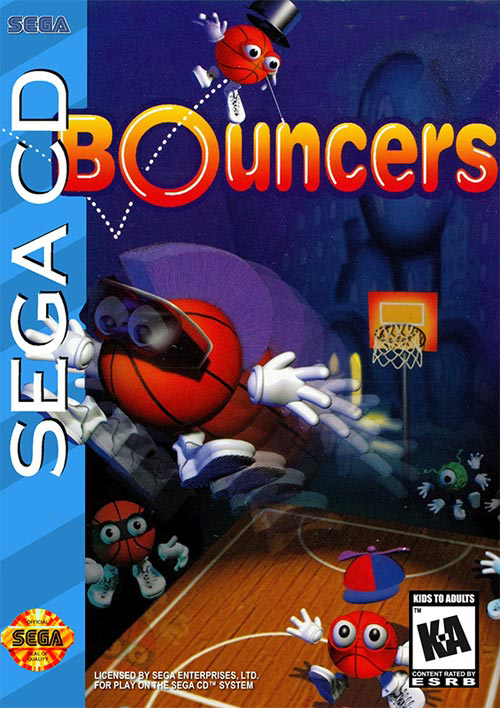
Bouncers (Sega CD, 1994) was a physics-based action game featuring animated basketballs with personalities and attitudes.
For Garvin, it represented a major creative milestone: his first opportunity to create virtually an entire game world himself.
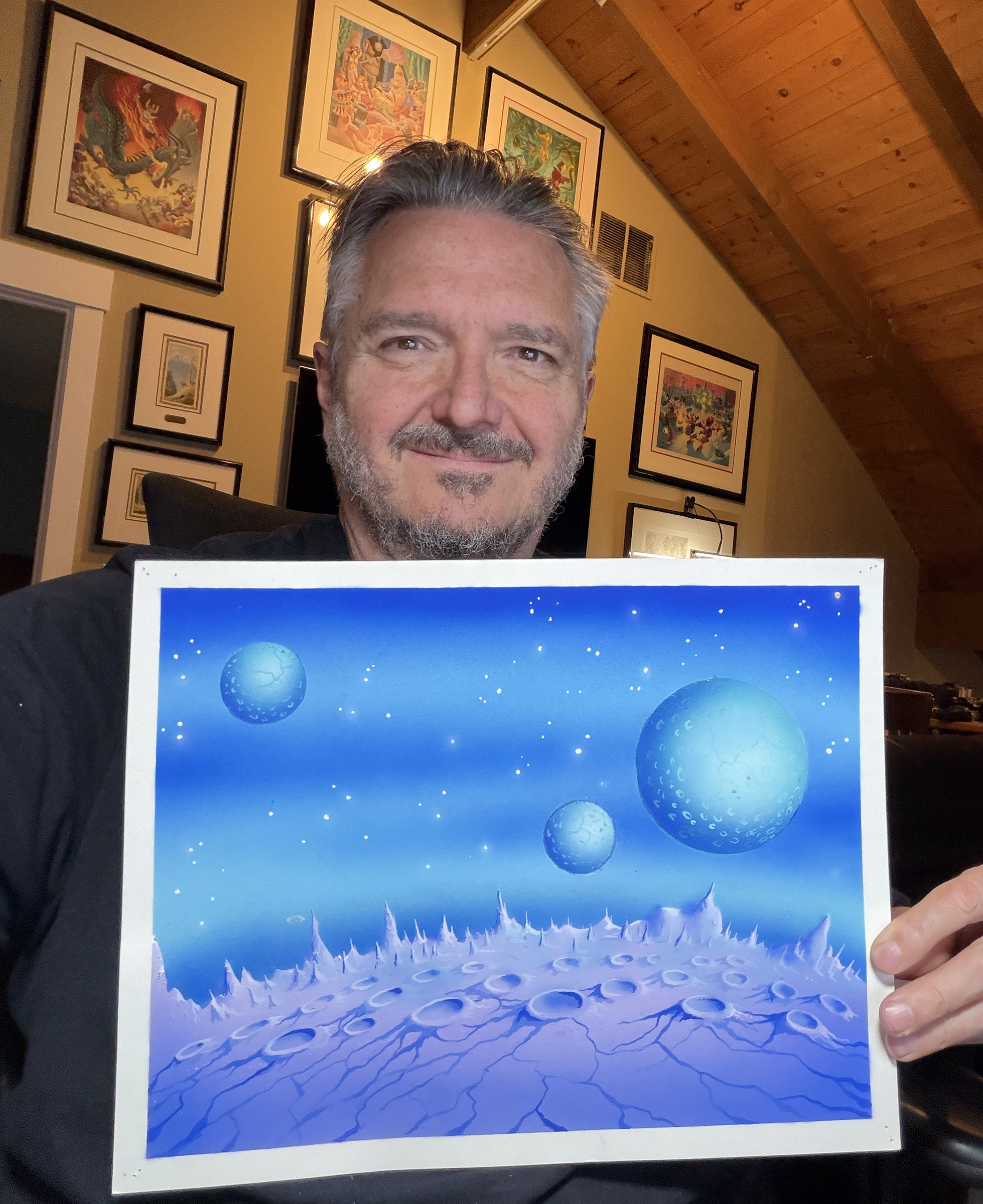
Working with a game designed by Dynamix veterans Randy Thompson, Rhett Anderson, and Tim Midkiff, Garvin wrote the game cinematics and created its characters, playing courts, and animations. The artwork combined traditional watercolor painting, airbrush illustration, and early digital graphics, drawing on techniques he had developed through years of painting and cartooning. The game's cinematics were all done in 3D Studio and Dpaint Animate, in some of the earliest all-digital cutscenes.
The project brought together disciplines that had previously occupied different parts of his life. He could design a character, paint the environment it inhabited, animate its movements, write its dialogue, and create the cinematic sequences that brought its personality to life. He also created the published Sega CD cover artwork for Bouncers, extending his work from the characters, courts, animations, and cinematics to the game’s packaging.
Bouncers also took him to Hollywood for the first time to direct professional voice actors.
Among them was Mark Hamill, whose portrayal of Luke Skywalker in Star Wars had helped inspire Garvin back in 1977. Less than two decades after seeing that film for the first time, he was directing Hamill in a recording studio.
The experience was an early demonstration of an approach that would define much of Garvin's career: using whatever creative and technological tools were available to build characters and worlds from the ground up.
His next game would take that experience in an entirely different direction.
MissionForce: CyberStorm
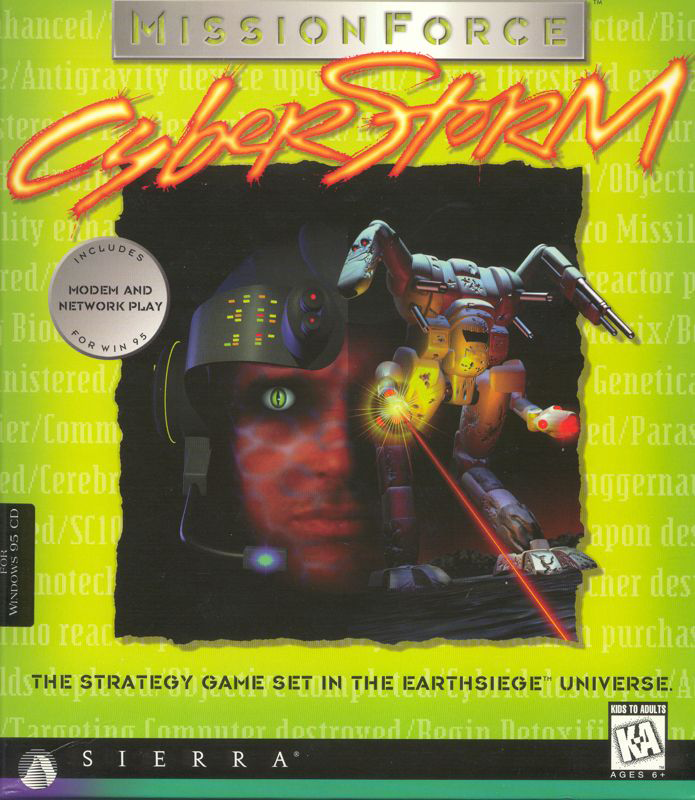
MissionForce: CyberStorm (PC, 1996) was Garvin's first original science-fiction game as creator, writer, and director.
Set in a futuristic universe of alien worlds, heavily armed robotic war machines, and tactical warfare, the game combined turn-based strategy with detailed 3D graphics and animation.
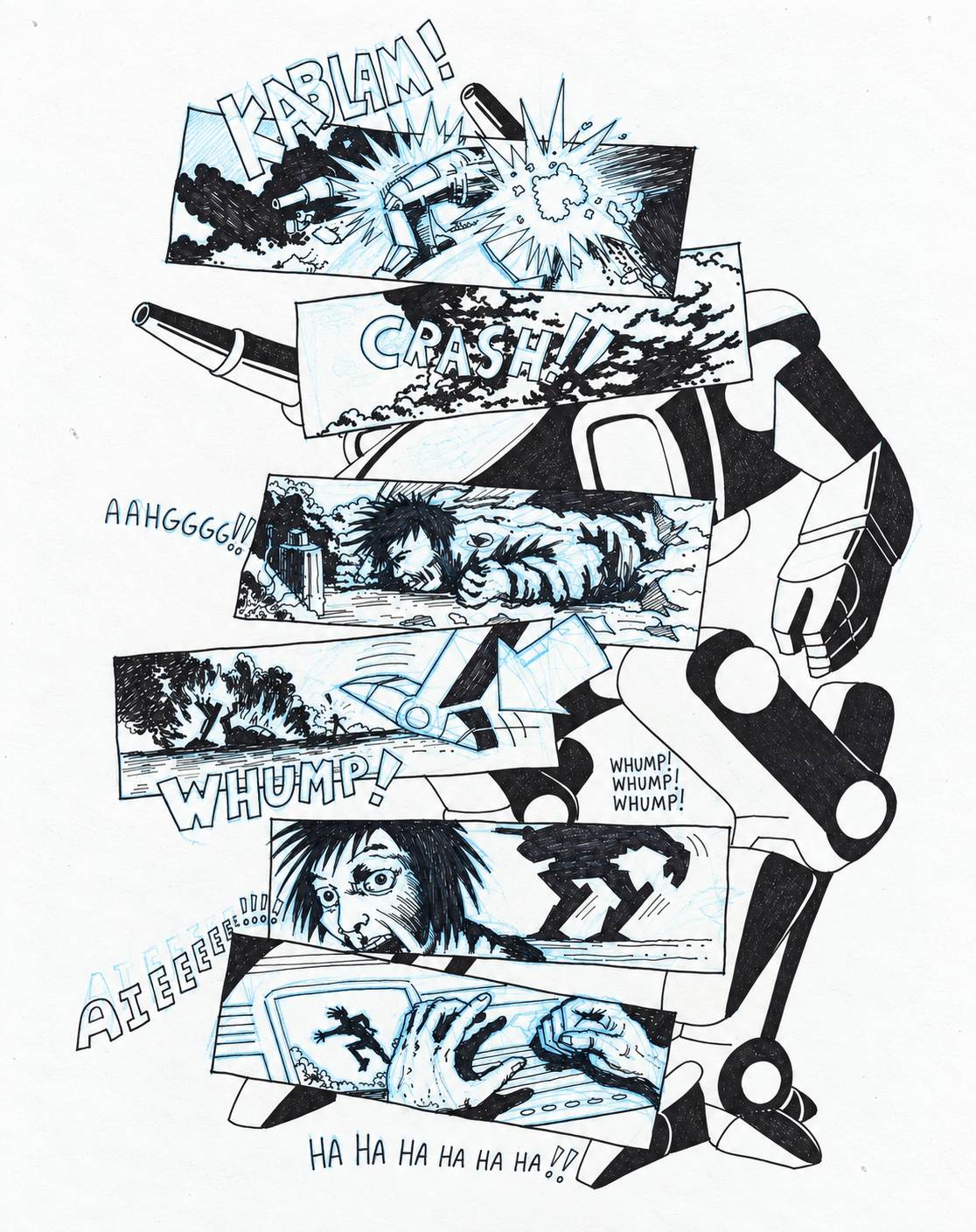
Garvin conceived the game, wrote and directed it, designed and modeled its mechanical combat units, and created their animations. Garvin also created the published PC box-cover artwork for MissionForce: CyberStorm.
The project drew on interests that had fascinated him since childhood: science fiction, military history, strategy games, robots, and imaginary technology.
Where Bouncers had allowed him to build an irreverent cartoon universe, MissionForce: CyberStorm offered an opportunity to create a more elaborate science-fiction setting with its own machinery, conflicts, and visual identity.
Together, the two games established a foundation for the next stage of his career. Garvin understood not only how to write and direct games, but also how to create the artwork, animation, and technology required to bring them to life.
As game development became increasingly specialized and teams grew larger, that combination of skills would prove invaluable.
PlayStation and Cinematic Storytelling
Garvin's career eventually took him to Sony's Bend Studio, where he became closely associated with the PlayStation platform.
His work on the Syphon Filter series helped establish the franchise as a cinematic action-thriller experience, combining espionage, international conspiracies, memorable characters, and increasingly sophisticated gameplay.
As writer and director across multiple entries in the series, Garvin helped shape the adventures of Gabe Logan and Lian Xing, characters whose stories continued across successive PlayStation platforms.
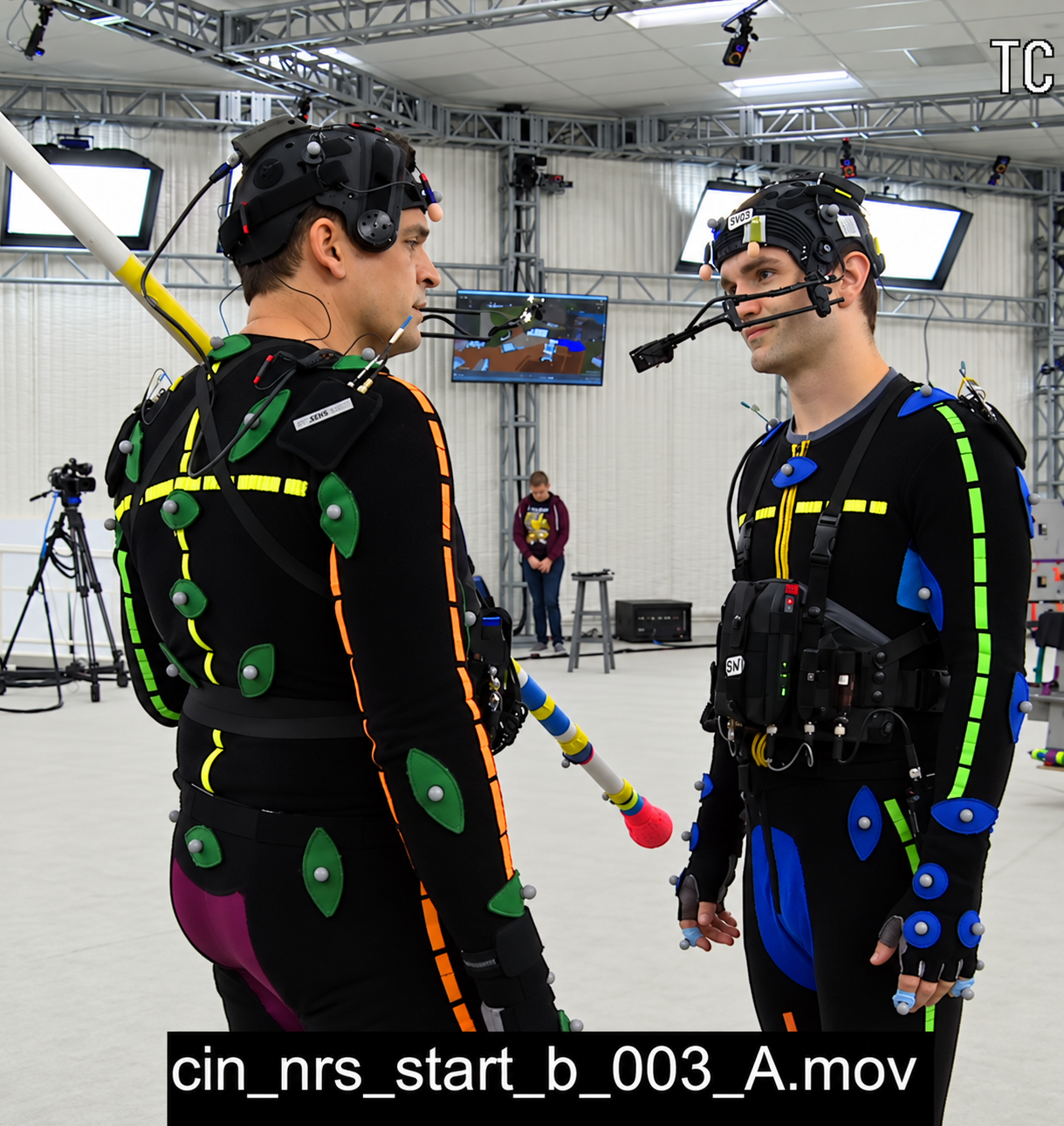
The franchise also offered opportunities to experiment with emerging production technologies. Garvin participated in the use of motion capture for Syphon Filter, bringing increasingly natural human movement to digital characters.
Later, he worked on Resistance: Retribution, expanding the science-fiction war setting of the Resistance universe into a new story for PlayStation Portable, centered on the character James Grayson.
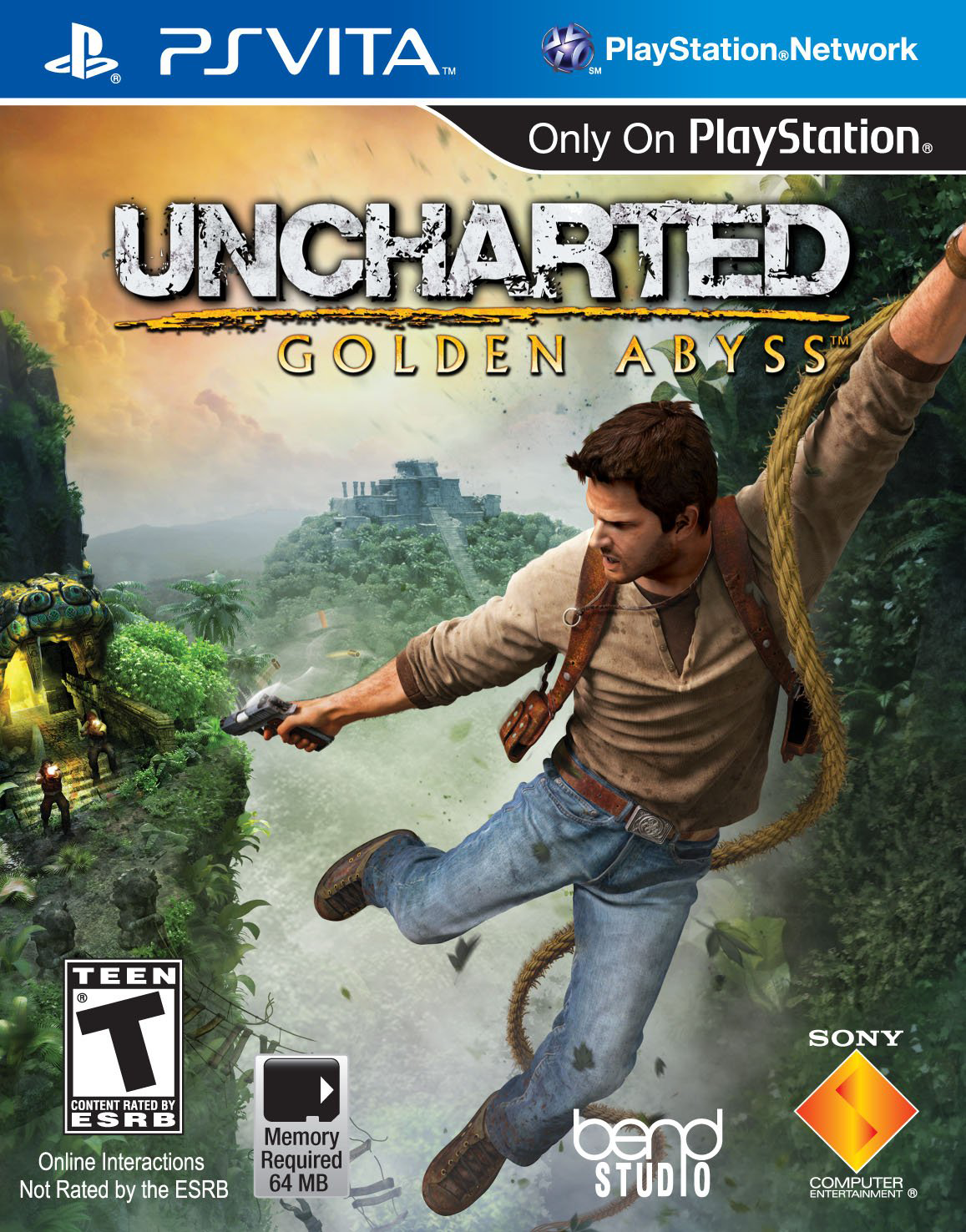
His next major project, Uncharted: Golden Abyss, brought another technological and creative challenge.
Working under the creative guidance of Amy Hennig, Garvin participated in the transition from traditional motion capture to performance capture, a process that integrated actors' physical performances, dialogue, and dramatic staging into increasingly sophisticated digital cinematics.
The game brought Nathan Drake's cinematic adventures to the PlayStation Vita, combining action, exploration, character-driven storytelling, and elaborate environmental design.
Garvin was named a finalist for a Writers Guild of America (WGA) Award for the script of Uncharted: Golden Abyss. WGA Award.
By this point, video games had traveled an extraordinary distance from the Pong machine Garvin had played as a child. Digital characters could now deliver nuanced dramatic performances, and interactive worlds could rival the visual complexity of feature films.
But Garvin's most ambitious project was still ahead.
Days Gone
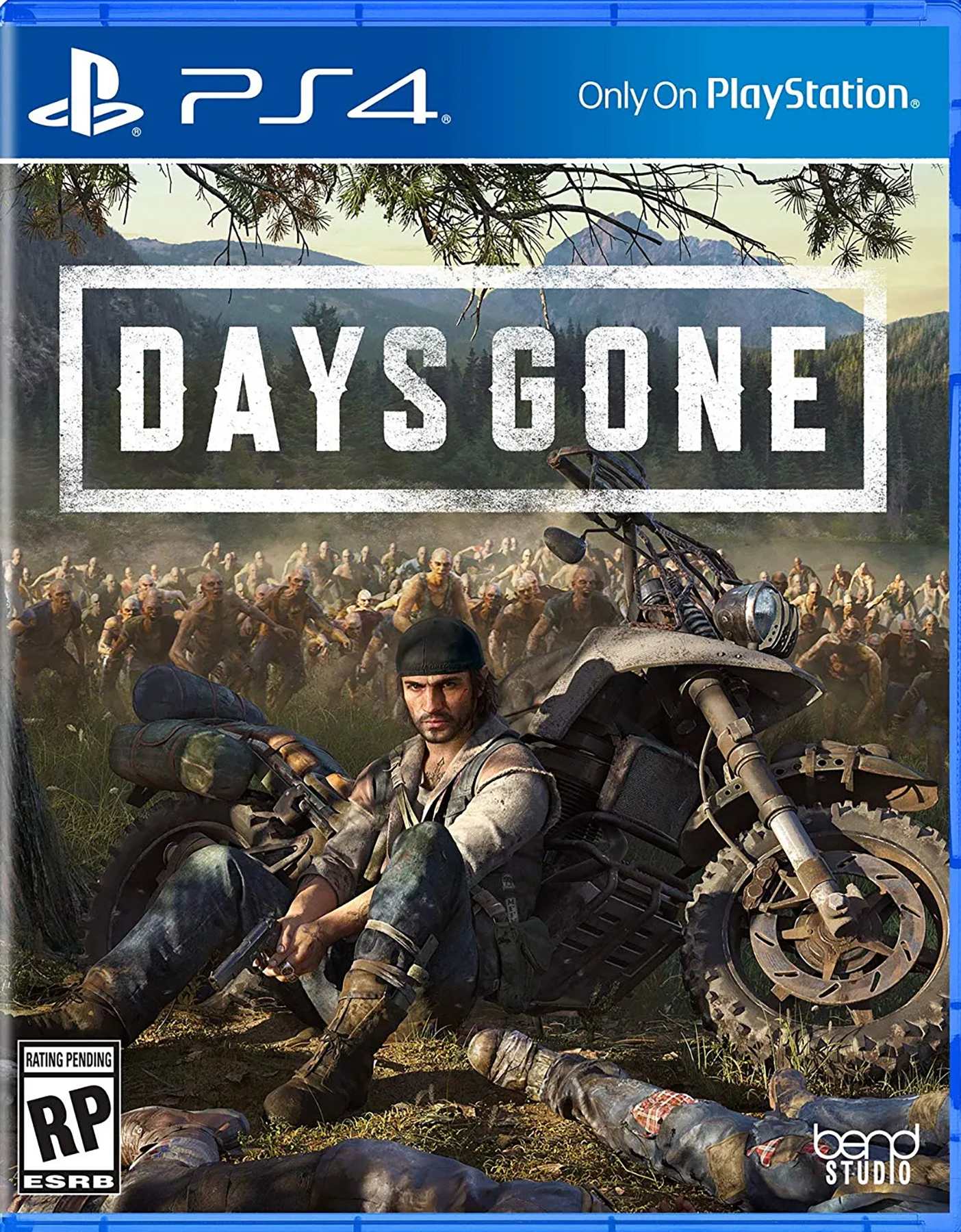
Days Gone was the culmination of Garvin's decades of experience in writing, directing, game design, and world building.
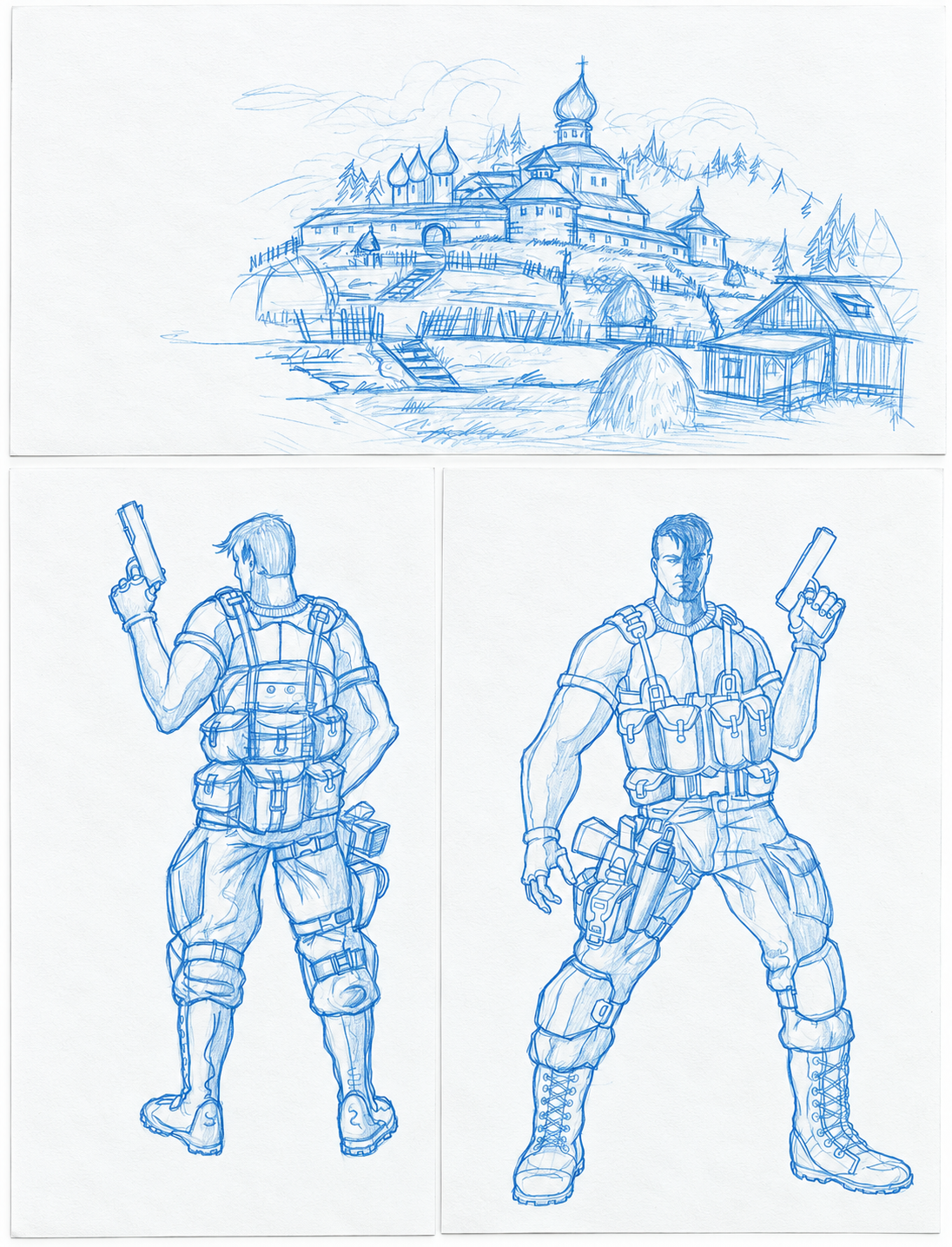
As the game's creator, writer, and creative director, he helped develop an open-world action adventure set in a fictionalized version of the Pacific Northwest following a devastating global pandemic.
The setting drew heavily on the landscapes of Central Oregon: mountains, forests, lakes, volcanic terrain, abandoned highways, and isolated communities.
But the world was more than a backdrop for action. Its environments, characters, factions, and history were designed to support a story about survival, loyalty, loss, and the struggle to retain one's humanity.
At the center was Deacon St. John, a former outlaw biker whose search for meaning in a devastated world provided the emotional foundation for the game.
The production brought together the many disciplines Garvin had practiced throughout his career: character creation, dramatic writing, cinematic direction, visual design, interactive systems, and the construction of a believable fictional environment.
Garvin’s involvement extended beyond the game itself. He designed and wrote The Art of Days Gone, the official art book published by Dark Horse, documenting the characters, environments, and visual development of the game. He also art directed the vinyl edition of the Days Gone original soundtrack and wrote its accompanying copy, collaborating with Sony’s music department and composer Nathan Whitehead. Both projects extended the world of Days Gone into collectible physical editions.
Released for PlayStation 4 in 2019, Days Gone became one of the defining projects of his career.
Days Gone also received Golden Joystick Awards recognizing its story and game. Golden Joystick Awards.
It also marked the end of his full-time career in AAA game development, opening the door to a new period of independent creative work.
The Historian and Publisher
Throughout his years in game development, Garvin continued painting, cartooning, and studying the history of illustration.
Beginning in the 2000s, he devoted increasing attention to researching and publishing books about the artists, teachers, and creative traditions that helped shape American cartooning.
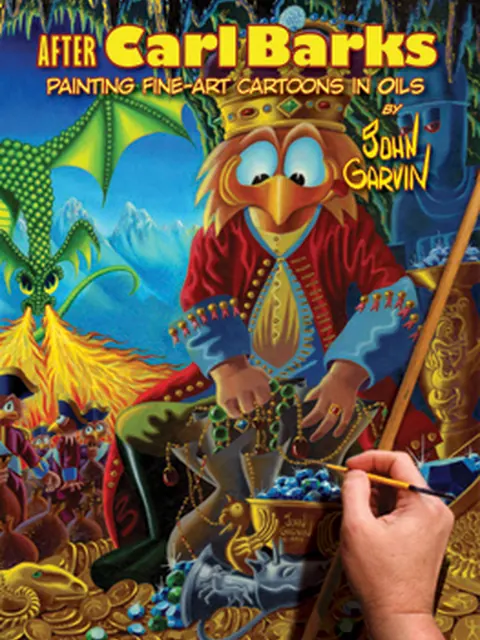
One of his first published works, After Carl Barks: Painting Fine-Art Cartoons in Oils, chronicles his history with the Barkses and how he learned the craft of oil painting during the 1980s. See the video. In 2025, Garvin was given permission to remaster Donald Ault and Thomas Andrae's seminal 1970s interview with Carl Barks. Garvin not only added bookmarks and chapter headings, he restored the audio and video using modern digital tools. See the interview here.
His publishing projects included studies of Charles N. Landon's School of Illustrating and Cartooning, W. L. Evans's cartooning instruction (see the launch trailer), and Frederick J. Waugh's imaginative writings, including The Clan of Munes. In 2021, Garvin published the third edition of the Landon book (see the launch trailer). His 2010 documentary explores the history of early cartoon correspondence schools (see the video).
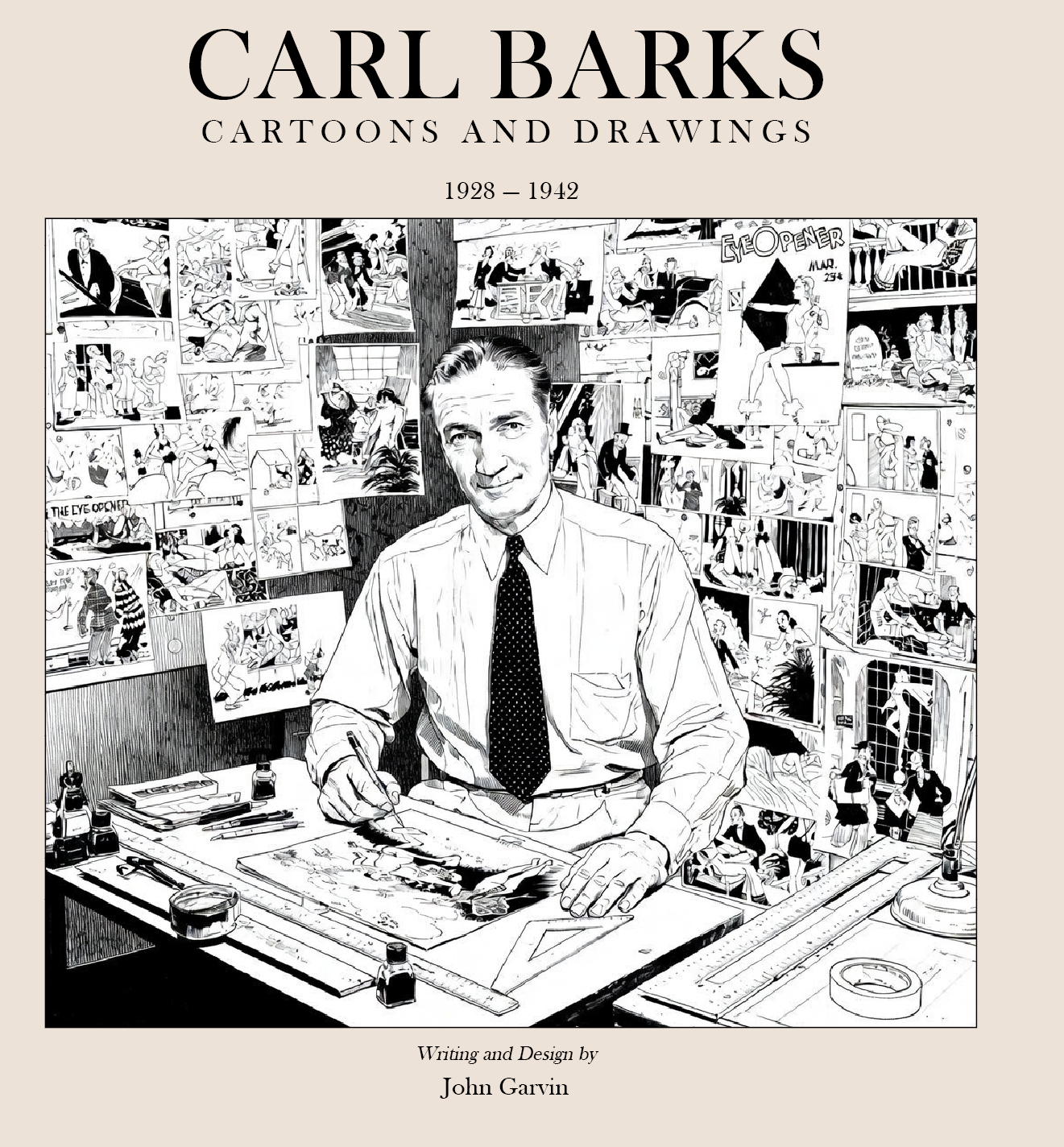
He also undertook major projects documenting the paintings and drawings of Carl and Garé Barks, combining archival research, historical commentary, artwork reproduction, and book design. In 2020, he launched a successful Kickstarter for Carl Barks: Paintings and Drawings 1966–1971 (see the video), a high-quality coffee-table art book that went on to win several editorial awards (see the video). In 2025, Garvin published a companion volume collecting the paintings of Garé Barks, Carl's wife and longtime assistant: Garé Barks: Paintings and Drawings 1961–1981. See the launch video here. With so many fake Garé paintings appearing on eBay, Garvin also made a video explaining how to spot them (see the video). To celebrate Garé's work, Garvin made a tribute video in 2025 (see the video).
His interest in Barks eventually extended beyond the famous Disney comics and oil paintings to the artist's earlier career, including his cartoons for The Eye Opener during the late 1920s and 1930s.
For Garvin, historical scholarship is another form of world building: reconstructing the creative environments, forgotten personalities, and artistic traditions that shaped the popular culture of the twentieth century.
Trace War
When Garvin left Sony in 2019, he was far from finished creating games—or worlds.
Together with fellow industry veterans Jeff Ross and Barry Drew, he established Blinding Tears Entertainment, where the team developed Ashfall, an original science-fiction property for Korean game publisher Smilegate.
Set centuries in the future, Ashfall imagined a world transformed by climate change, volcanic catastrophe, and the collapse of modern civilization. Conceived as a spiritual successor to Days Gone, it expanded Garvin's interest in post-apocalyptic storytelling into a far more distant future, with new characters, technologies, societies, and conflicts.
The project also represented a new chapter in his career. After decades working within established studios, Garvin was once again developing an original universe from the ground up.
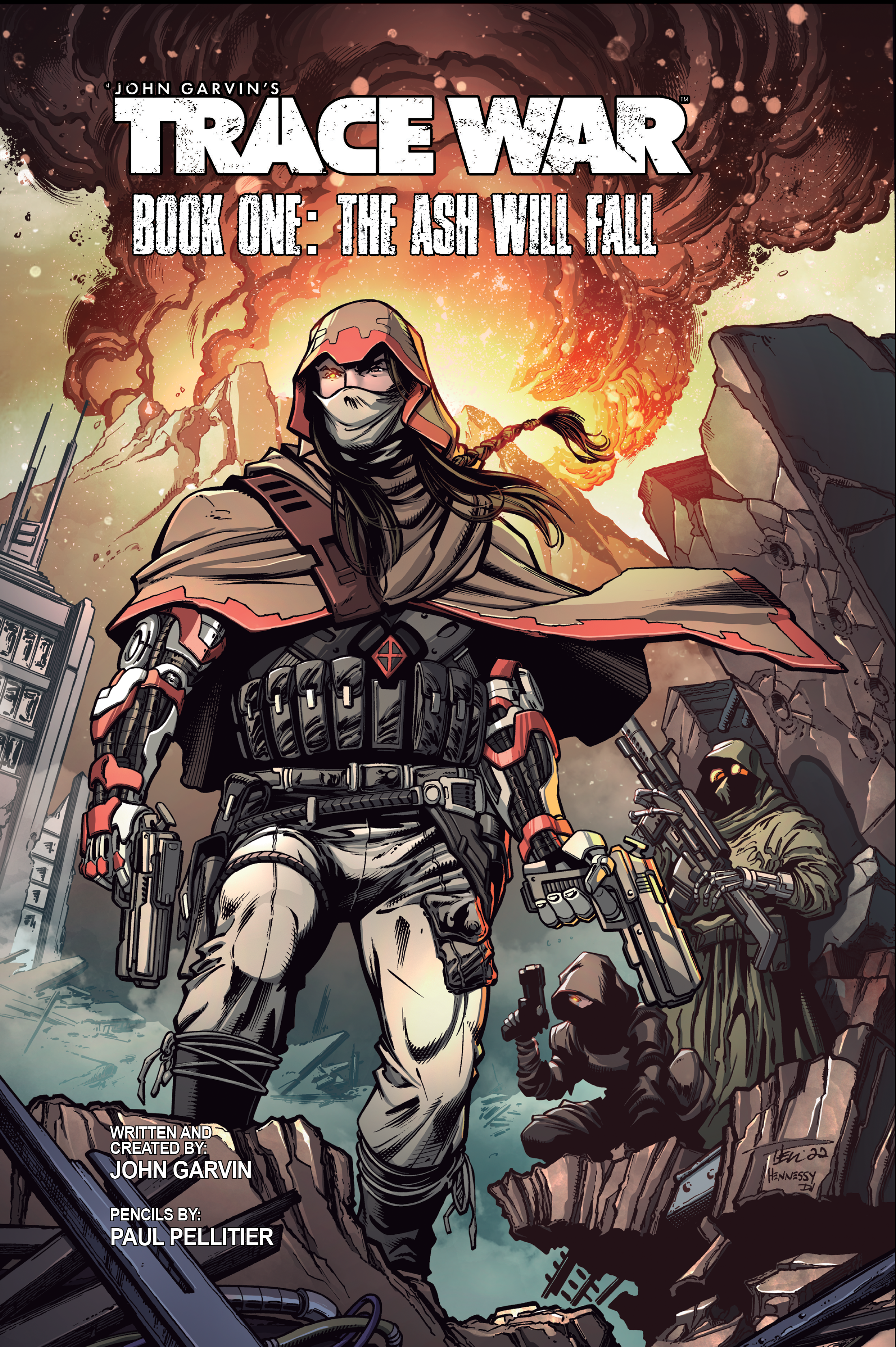
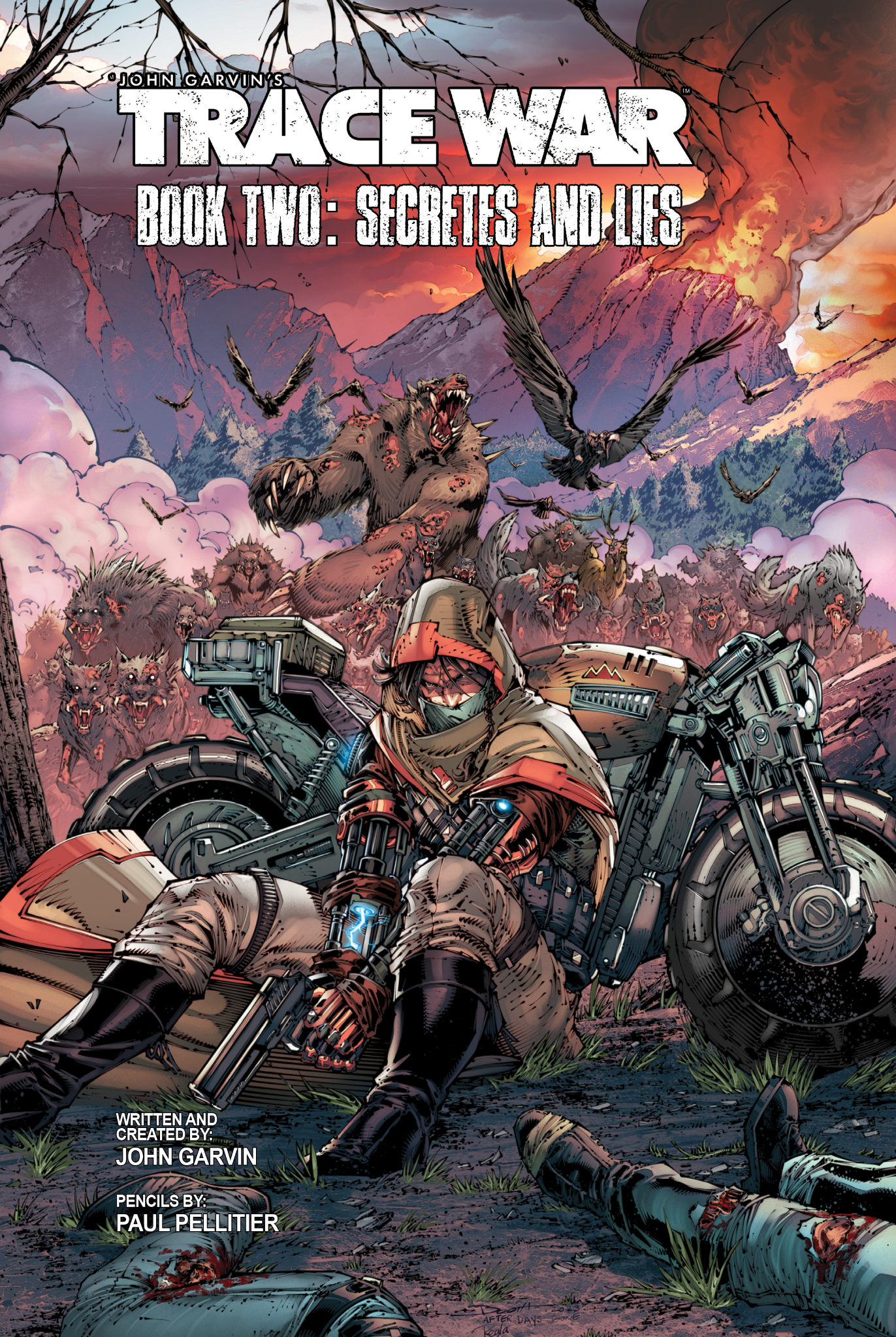
In 2022, he joined Michael Mumbauer, a veteran PlayStation executive, as an original member of Liithos, a new game and entertainment studio. See Garvin's swag unboxing video here. Garvin served as vice president of creative, writer, and director, bringing Ashfall into a larger effort to develop stories across games, comics, and other media. See the Liithos Kickstarter video here. Working with Liithos and acclaimed comic-book artist Paul Pelletier, whose credits include Aquaman and Guardians of the Galaxy, Ashfall was released as an extremely limited six issues of comic books featuring multiple covers by acclaimed comic-book artists, as well as a graphic novel. You can see Garvin unboxing some of the comic-book original art here. See Garvin unboxing the comic-book issues here.
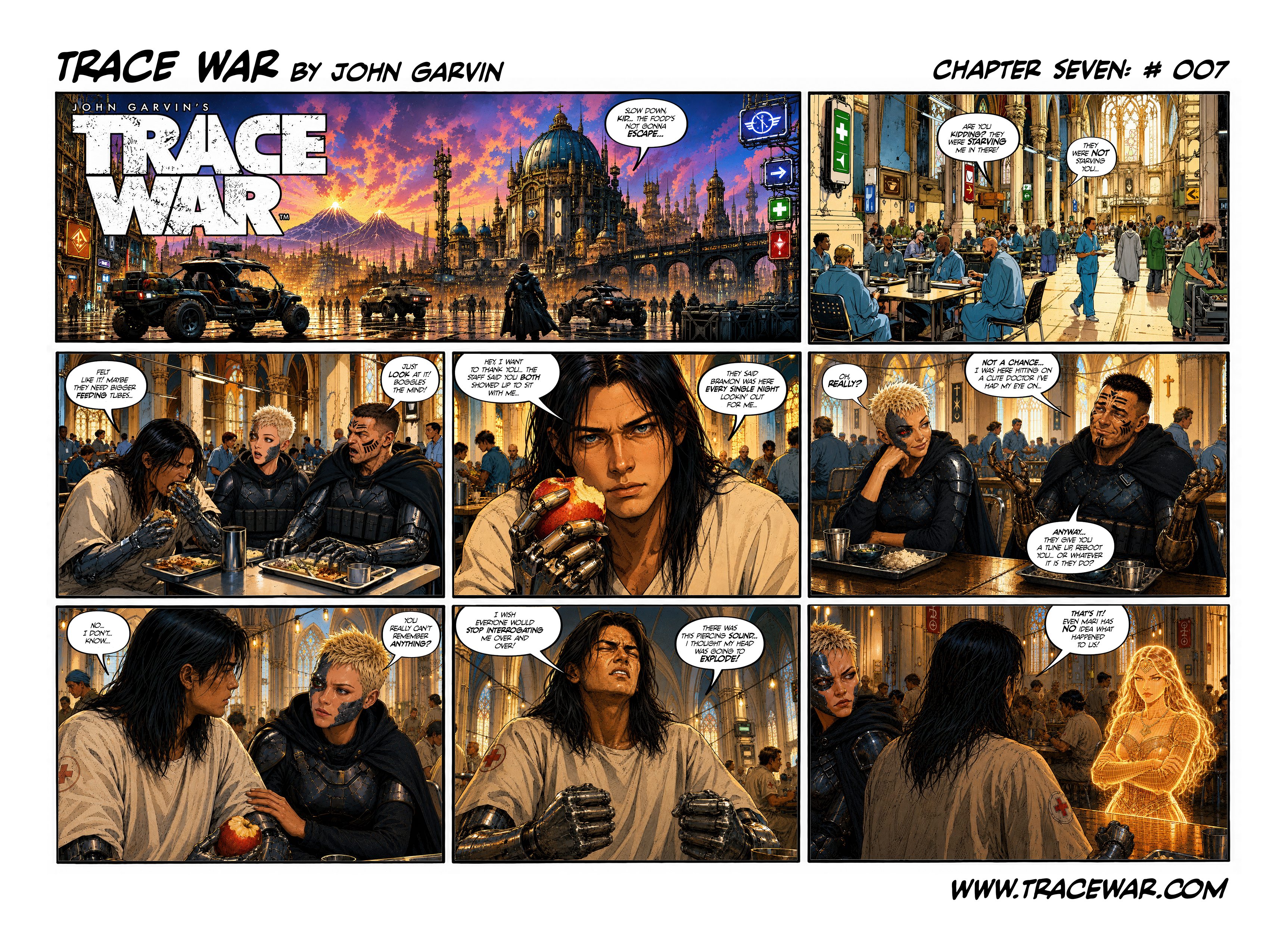
In 2026, Garvin purchased the IP from Liithos, becoming the sole creator and owner of the IP, now officially titled Trace War. Garvin continues to develop Trace War as a graphic novel, comic strip, novel, audiobook, and video game franchise. For Garvin, the graphic novel project is a return to his roots in independent comics. Four decades after creating cartoons and comic strips in the 1980s, he was once again writing stories intended to unfold through sequential art. This time, however, he brought with him decades of experience directing cinematic action, developing complex characters, and constructing elaborate fictional worlds.
Garvin also began experimenting with new ways of bringing those stories to life. Using Unity, Garvin created a motion comic version of the graphic novel, combining comic-book artwork with animation, sound, and interactivity. He also developed a playable Trace War combat card game, experimenting with Midjourney and generative AI to produce artwork for the project. See Garvin discuss the making of the card game here.
These experiments brought him back to something he had enjoyed in the earliest days of personal computers: working directly with new technology, learning its possibilities, and creating things himself.
Peggy and Other Comic Strips
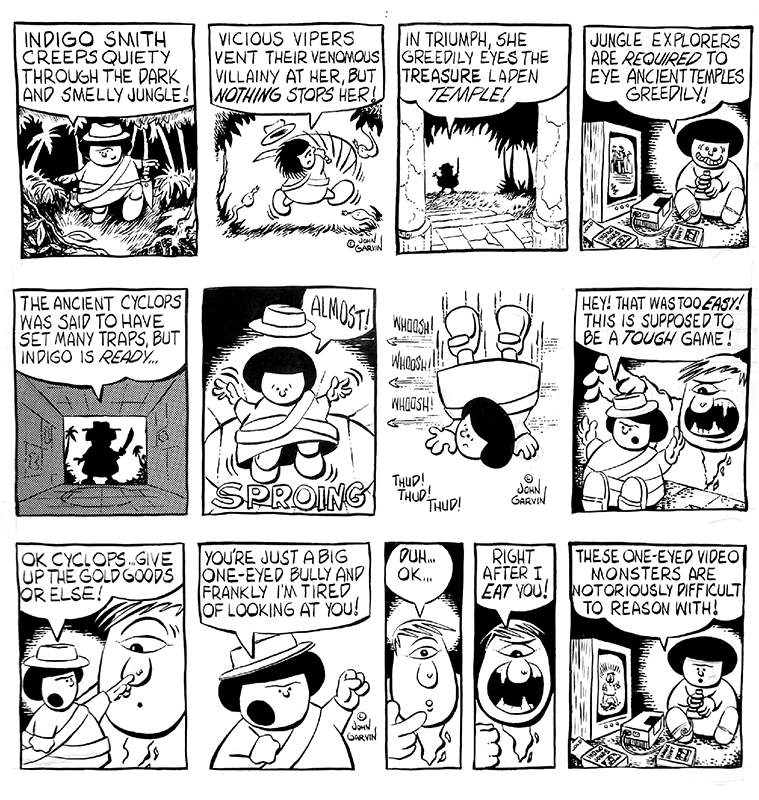
In the 1980s, Garvin was a small part of the creative explosion of black-and-white comics spearheaded by Dave Sim’s Cerebus, Eastman and Laird’s Teenage Mutant Ninja Turtles and others. Garvin’s contributions were much smaller, mini comics like In A Rut Comics, Featherton Fowl, and the Barks inspired Animal Comics. One project Garvin worked on was a comic strip called Peggy, about a young girl whose adventures reflected his love of newspaper comics, animation, and visual humor. Decades later, emerging AI tools made it possible to return to those characters and explore new ways of producing comic-strip artwork.
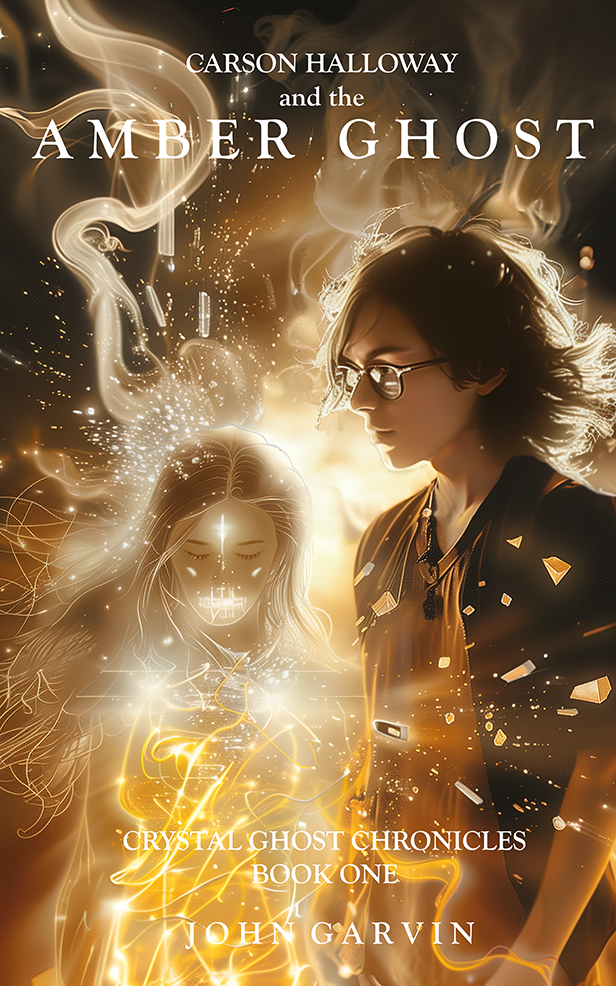
One was Peggyland, a new collection of comic strips created largely for the pleasure of seeing an old imaginary world come to life again. There was something fitting about the experience. More than forty years after programming games on the Atari 800, Garvin was once again experimenting with unfamiliar tools, discovering what they could do, and using them to tell stories. But Garvin is also experimenting with creating all new worlds based on his other projects, a Trace War comic strip, for example, and a strip based on his yet-to-be-published novel, Carson Halloway and the Amber Ghost, part of the Crystal Ghost Chronicles. “I think that once artists and writers understand that AI isn’t replacing them, but is a tool they can use to expand their vision, allowing them to create things that would have been impossible before, we’re going to see an explosion of creative work in all genres. Yeah, there will be lots of ‘slop’ and crap too, but we already have that, don’t we? Let’s see what creatives can do!” To see more about Garvin's comic strips, click here.
New Fine-Art Cartoon Paintings
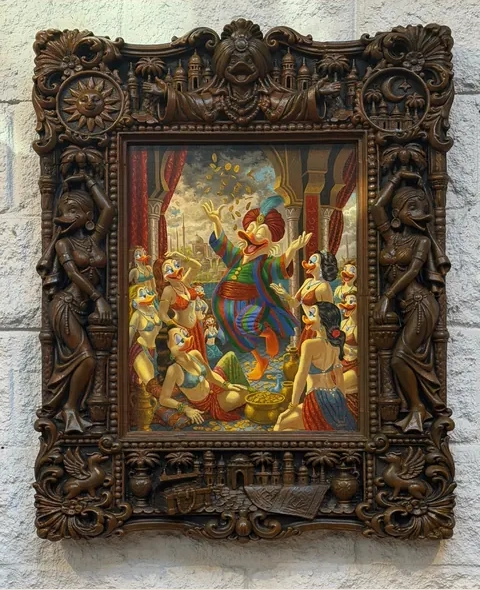
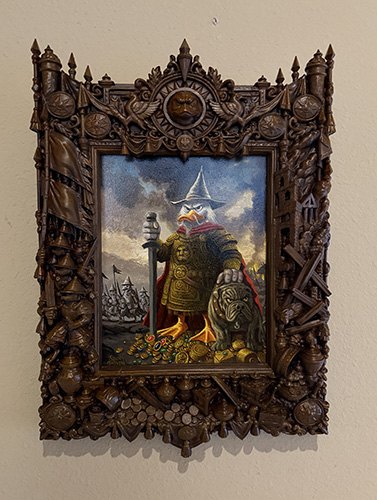
In 2025, Garvin started a new series of fine-art cartoon oils he's calling Famous Fowl of Fact and Fable, carrying on a tradition began by Carl Barks’s Kings and Queens of Myth and Legend and Famous Figures of History as They Might Have Looked Had Their Genes Gotten Mixed with Waterfowl series of paintings. In many cases, Garvin is creating works based on drawings, sketches, and ideas that Barks never got around to painting. “I'm having a lot of fun with these paintings, mostly because I'm literally playing with ideas, tropes, and cartoons that come from Barks himself. The very idea of a series of paintings connected by theme and genre comes from Barks. I've taken those ideas and expanded on them. Many of these paintings are based on ideas or cartoons that Barks came up with, but never got around to painting, like my Ghengis Khan is based on a Barks idea sketch. My Sultan painting is based on a cartoon Barks drew in the 1930s that he never intended to become a painting – that's honestly part of the fun of doing these, trying to imagine what Barks would have done with it.”
In 2026, Garvin discovered the world of 3D printing - yet another world of creation to explore - which he's using to create narrative frames to go with his new paintings. “I think narrative frames are the new frontier in creativity. New AI tools like Meshy can create fully 3D models from simple drawings. Free to use tools like Blender can help you make them ready to become frames. And 3D printing technology has improved so much – and come down in price – so that any artist can now experiment with creating intricate, sculpted models, including ornate, narrative frame. It's pretty exciting.”
The Future
Garvin's creative life has followed an unusual path, from oil painting and independent comics to the earliest multimedia games, 3D graphics, cinematic performance capture, open-world game development, graphic novels, and artificial intelligence.
He has worked with pencil and ink, watercolor, airbrush, oil paint, BASIC programming, 3D modeling, game engines, and generative AI. He has created cartoon characters, robotic war machines, fictional civilizations, post-apocalyptic landscapes, and stories told through games, comics, novels, and paintings. The technologies have changed enormously. The underlying ambition has remained remarkably consistent.
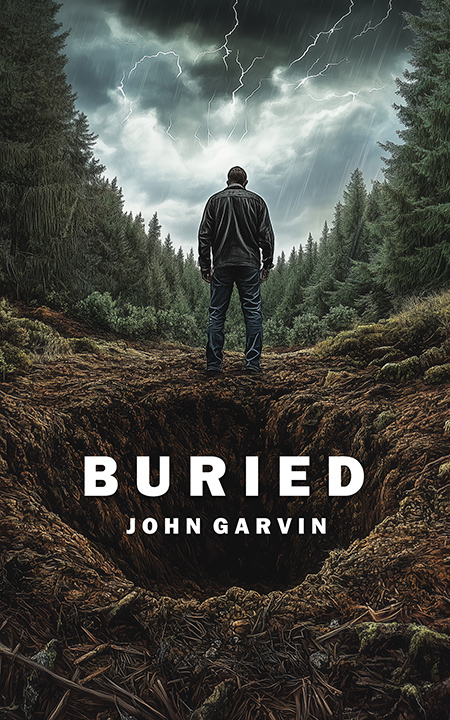
Today, Garvin continues to write, paint, research, and experiment with new creative technologies. What does the future hold? “Well, I’m currently working on that huge collection of Carl Barks cartoons from 1928–1935 and beyond, a body of cartooning work which is really larger and more important than I think Barks collectors and scholars have any idea. So much to talk about. I’ve also written two novels that aren’t published yet, Buried, a highly offensive Splatterpunk story about a serial killer, and Carson Halloway and the Amber Ghost, which I’m describing as a slipstream, realistic novel about a non-Christian view of the afterlife. It’s fun. I’m continuing to work on Trace War, the game, comic-strip and graphic novels. And, of course, I’m working on several series of fine-art cartoon paintings. Life is busy.”
Since “retirement” he’s also said that he’s looking to “give back,” mentoring young artists, writers, and game developers. He’s available for creative consulting, speaking engagements, and interviews – sharing a lifetime of experience at the intersection of storytelling, art, and technology.
For Garvin, the medium has never been the point. Whether creating an entire game world, painting a single narrative scene, writing a novel, or bringing a comic-strip character back to life, the challenge is the same: to imagine something that doesn't exist and find a way to make it real. As he wrote in 2024, reflecting on nearly fifty years of painting and creative work:
"I feel like I've finally 'grown up,' but, with apologies to the writers of First Corinthians, I have not put away my childish things, and frankly, never will."